Two more RetroPie landings push the fleet to 52 LAUNCHABLE: Sega CD (#51, Genesis first-def-wins base with sub-68000 CD substrate and RF5C164 PCM stereo), and Atari Jaguar (#52, 68000 + dual Tom/Jerry DSPs, 320×240 direct-color framebuffer). sigil-fs completes the NTFS VFS write path with nested-directory rename (ntfs_rename_in) and rmdir (ntfs_rmdir_in + ntfs_has_mft_children). All 360 tests PASS. (sigil-retropie 8f6219c, f0f8d7c; sigil-fs 738c2be, 570ad7c)
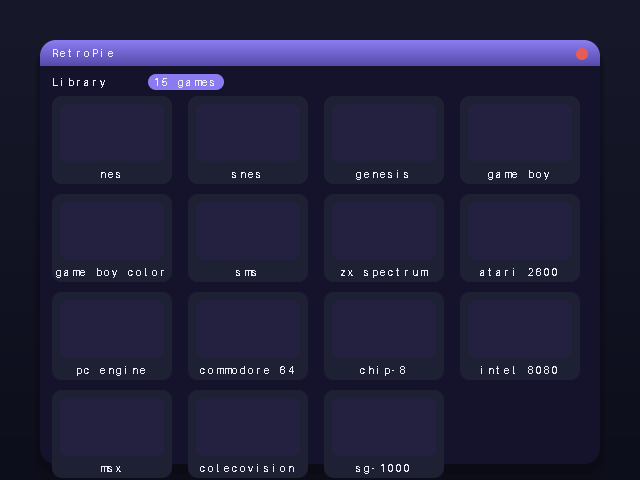
Sega CD — system #51 (8f6219c)
cores/segacd.sg is layered over cores/genesis.sg using the first-def-wins architecture (same pattern as Sega Pico, #49). The base Genesis core — 68000 CPU, VDP, YM2612 FM, SN76489 PSG — runs unchanged. Sega CD adds three layers on top:
EL0 app apps/segacd loads /roms/game.iso (ISO image cap). Test result: uart=51 PASS.
Atari Jaguar — system #52 (f0f8d7c)
The Jaguar is the only 64-bit console in the fleet. Its architecture is unique: a 68000 handles OS and game logic while two custom DSPs — Tom and Jerry — do the heavy lifting in parallel.
m68000.sg stub used across the Atari/Sega fleet, bound here with a Jaguar-specific core_id. Handles game main loop and OS calls.EL0 app apps/jaguar loads /roms/game.jag. Test result: uart=52 PASS.
The fleet at 52
The fleet now covers every major home console generation from the Atari 2600 through the Jaguar — the last 5th-generation holdout before N64/PS1. The first-def-wins architecture has proven its value at scale: Sega Pico (#49) and Sega CD (#51) each required ten lines of override or fewer on top of genesis.sg. The common 68000 stub similarly serves the Genesis, Sega CD, Jaguar, and Atari ST family without duplication.
| System | Number | Architecture | Commit |
|---|---|---|---|
| Sega CD | #51 | genesis.sg + sub-68000 + RF5C164 + CD substrate | 8f6219c |
| Atari Jaguar | #52 | 68000 + Tom DSP + Jerry DSP + 320×240 framebuffer | f0f8d7c |
NTFS nested rename (738c2be — sigil-fs)
ntfs_rename_in(parent_rec, old_name, old_namelen, new_name, new_namelen) renames a file inside a specific subdirectory without requiring index traversal.
The function finds the target file via MFT scan + ParentRef check. This is necessary because ntfs_create_in does not update the parent's $INDEX_ROOT, making directory traversal via the B-tree index unreliable for files created through the VFS write path. Once found, it updates $FILE_NAME.FileName in the MFT record in place.
VFS wire: vfs_parent_sub now returns nested=1 → resolves the parent path → dispatches to ntfs_rename_in(parent_rec, ...). The prior dispatch was root-only; nested renames silently fell through.
Test: ntfs_renamein_test (RNO, PASS). Added to MANIFEST. 359/359 PASS at this commit.
NTFS nested rmdir (570ad7c — sigil-fs)
Completing the NTFS nested write path, ntfs_rmdir_in(parent_rec, name, namelen) removes an empty subdirectory inside a specific parent. Two new functions support it:
$FILE_NAME.ParentRef matches dir_rec. Catches children created via ntfs_mkdir_in/ntfs_create_in, which set ParentRef but do not update the parent's $INDEX_ROOT.ntfs_readdir (for $INDEX_ROOT entries) AND ntfs_has_mft_children (for MFT children). Returns -1 not-found/not-dir, -2 not-empty, 0 ok.The dual emptiness gate is required because the two child-tracking mechanisms are independent: a directory can appear empty to ntfs_readdir (no $INDEX_ROOT entries) while still having MFT children with matching ParentRef. Either gate alone would produce false-empty results.
VFS wire: rmdir dispatch was root-only; now dispatches to ntfs_rmdir_in for nested paths.
Test: ntfs_rmdir_in_test (RINEFGHJ, PASS). 360 tests — ALL PASS. The FS harness ceiling rises again.